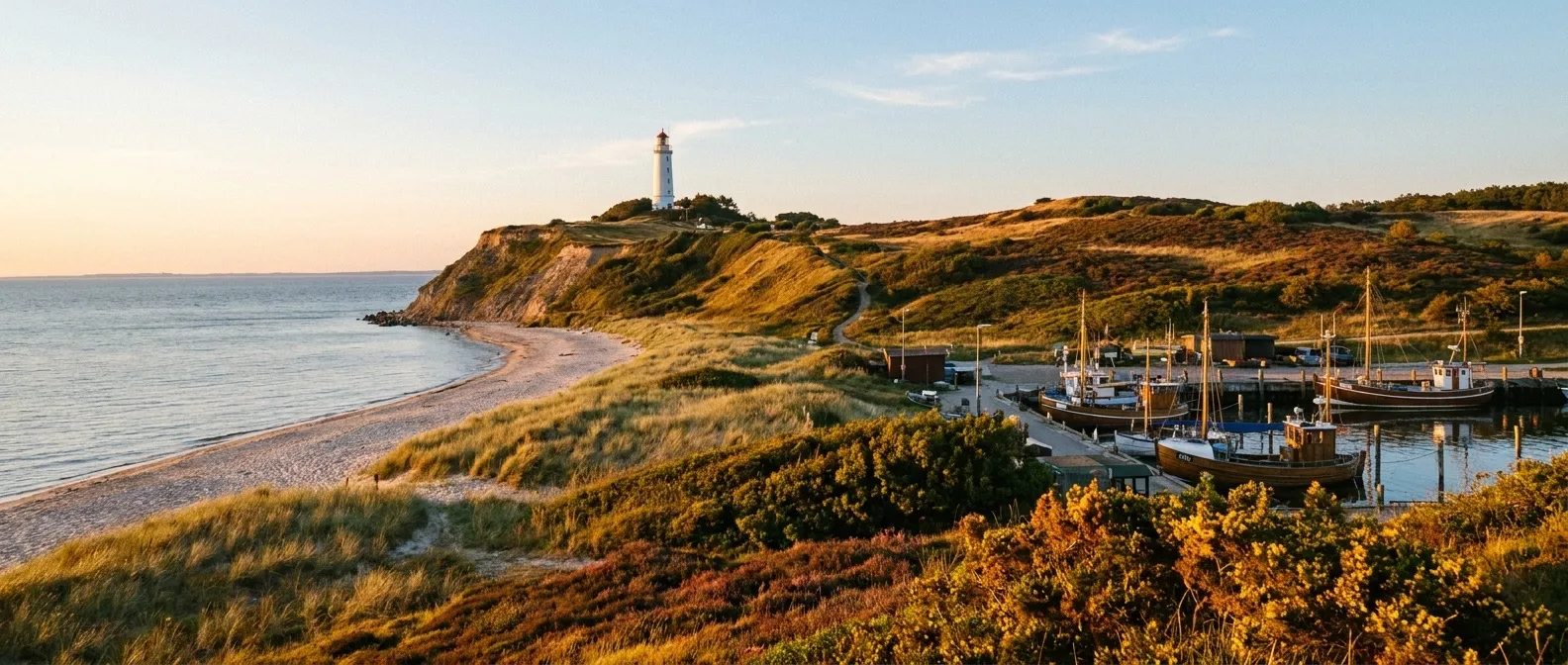
Germany's car-free island retreat in the Baltic — where bicycles rule, sea buckthorn grows wild on the dunes, and 17 km of white-sand beaches stretch along an impossibly peaceful coast.
Hiddensee is a niche stop — mainly riverboats and small coastal cruise vessels dock directly at Kloster or Vitte piers; guests from larger ships typically arrive by ferry excursion from Schaprode (Rügen) or Stralsund.
💡 Pro move: Bring cash — many small vendors, bike hire shops, and fish stalls are card-free.
Small vessels dock directly at Kloster or Vitte; guests from larger ships reach the island by scheduled ferry from Schaprode (western Rügen) or Stralsund.
| Cruise Line | Typical Berth / Arrival | Dock or Tender |
|---|---|---|
| Riverboats & small coastal cruise ships | Kloster Harbour (north) or Vitte Harbour (central)📍 | Docked |
| Large ocean ships (shore excursion) | Ferry from Schaprode (Rügen) or Stralsund📍 | Tendered |
Hiddensee rewards slow exploration — rent a bike, climb the lighthouse, and spend time on the Baltic beaches rather than rushing an organised tour.
Hike or cycle to the 1888 Dornbusch Lighthouse on the island's dramatic northern cliffs. Climb 102 steps for a panoramic view across the Baltic and Rügen — arguably the best viewpoint on the German Baltic coast.
Find lighthouse tour options →Cycle from Kloster south through Vitte to quiet Neuendorf, passing heath, dunes, and sheep. The full route is about 15 km one-way with virtually no elevation; return by electric bus if legs give out.
Find cycling tour options →Visit the preserved 1930s summer home of German Nobel Prize-winning novelist Gerhart Hauptmann in Kloster. Small but atmospheric — the island has been a magnet for artists and intellectuals for over a century.
Find Hiddensee cultural tours →Hiddensee's western coast is one long white-sand beach. Vitte's stretch is the most popular — rent a traditional Strandkorb (hooded wicker beach chair) and settle in for the afternoon.
Find beach day options →The island's small Heimatmuseum in Kloster houses a replica of the famous Hiddensee Viking gold jewellery (10th century; original in Stralsund), plus exhibits on island fishing life and maritime history.
Find Hiddensee history tours →Hiddensee is made for walking and cycling — no cars, flat terrain through dunes and heath, with the Baltic always close.
From Kloster harbour, walk north through beech forest up to the Dornbusch cliff top and lighthouse. Pass the island church and Gerhart Hauptmann's grave on the way. Stunning Baltic Sea views at the top.
🗺️ See full route in Maps →Walk or cycle south from Vitte through the Dünenheide coastal heath — one of Central Europe's last large coastal heathlands. Heather blooms purple in late summer. End at the whitewashed fishing village of Neuendorf.
🗺️ See full route in Maps →Transport options from the pier — taxis, shuttles, transit passes, and whether ride-share apps work here.
Electric public bus connecting Neuendorf, Vitte, Kloster, and Grieben — the full length of the island. The Deutschlandticket is also valid.
Rental bikes are widely available at all three main harbors (Vitte, Kloster, Neuendorf). Cycling is the most popular way to explore the car-free island.
Traditional Pferdewagen (horse carriages) carry passengers and luggage between villages. A charming and uniquely Hiddensee experience.
Water taxis run between Hiddensee's harbors and Schaprode on Rügen. Must be ordered by phone or at the harbor — no online booking. Fixed charter rate €130 for small groups.
Hiddensee is small and flat — the three main villages are a pleasant walk or short ride apart. The car-free environment makes walking safe and enjoyable.
Upcoming cruises that call at Hiddensee Island, Mecklenburg-Western Pomerania, Germany. Dates, prices, and ports of call change — always confirm with the cruise line before booking.
Itineraries and prices change — always confirm with the cruise line before booking. Some links are affiliate links that may earn us a commission at no extra cost to you.